
The rollout of 5G technology is completely transforming global telecommunications. With promises of ultra-low latency and multi-gigabit speeds, 5G is enabling innovations like autonomous driving, smart cities, and advanced industrial automation.
However, achieving these incredible speeds requires a massive overhaul of existing physical networks. Traditional cell tower cabling simply cannot handle the data load of modern networks. Therefore, telecommunications operators are rapidly shifting to FTTA solutions for 5G deployments.
In this article, we will explore what Fiber to the Antenna (FTTA) is, why it is replacing legacy coaxial cables, and the specific outdoor fiber products required to build a resilient 5G base station.
1. What is Fiber to the Antenna (FTTA)?
Fiber to the Antenna (FTTA) is a broadband network architecture used in modern cell towers and base stations. In traditional legacy setups, heavy copper coaxial cables were used to connect the Baseband Unit (BBU) at the bottom of the tower to the Remote Radio Head (RRH) at the top.
In an FTTA architecture, those bulky coaxial cables are replaced with high-speed outdoor fiber optic cables. The fiber runs from the BBU up the tower directly to the RRH, which is located right next to the antenna. This optical connection guarantees maximum signal integrity and massive bandwidth capacity.

2. Why 5G Base Stations Require FTTA Solutions
The transition from 4G to 5G is not just a software update; it is a physical hardware revolution. Here is why FTTA solutions for 5G are absolutely essential:
Massive Bandwidth for eCPRI
5G networks operate on higher frequency bands (including millimeter-wave) and utilize Massive MIMO (Multiple Input, Multiple Output) antennas. Consequently, the data traffic between the BBU and RRH has grown exponentially. FTTA utilizes protocols like CPRI and eCPRI, which rely on fiber optics to transmit hundreds of gigabits of data per second flawlessly.
Overcoming Signal Loss
Traditional copper coaxial cables suffer from severe signal attenuation (data loss) over long distances. As a result, towers using copper require large power amplifiers. Fiber optic cables, on the other hand, transmit data using light. They experience virtually zero signal loss, allowing the RRH to be placed further away from the BBU without any performance drop.
3. FTTA vs. Traditional Coaxial Cabling
To clearly illustrate the engineering advantages, here is a comparison between modern optical architectures and legacy copper systems:
| Feature | Legacy Cabling (Coaxial) | FTTA (Fiber Optic Cabling) |
| Bandwidth Capacity | Limited (Bottlenecks at high speeds) | Virtually unlimited (Supports 10G/25G/100G) |
| Signal Loss (Attenuation) | High (Especially over long distances) | Near zero |
| Weight and Size | Heavy and bulky (Hard to install) | Thin and lightweight (Reduces tower wind load) |
| Power Consumption | High | Significantly lower |
| EMI Resistance | Vulnerable to electromagnetic interference | 100% immune to EMI and lightning strikes |
4. Key OEM Products for Outdoor Fiber Networks
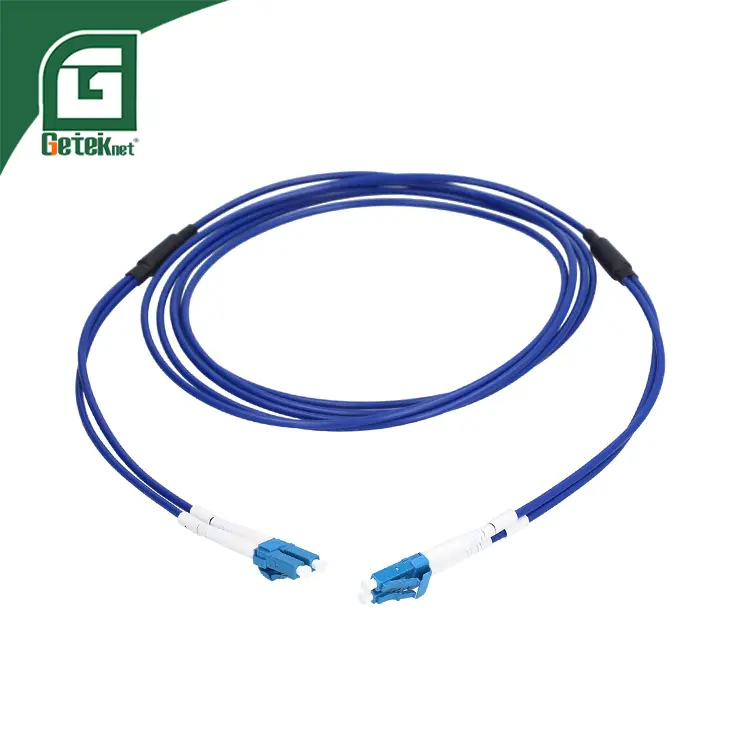
Building a reliable 5G base station requires specialized, highly durable equipment. Because cellular towers are exposed to extreme weather conditions, standard indoor cables will fail quickly. Leading OEM manufacturers provide specific FTTA solutions for 5G to ensure long-term stability:
-
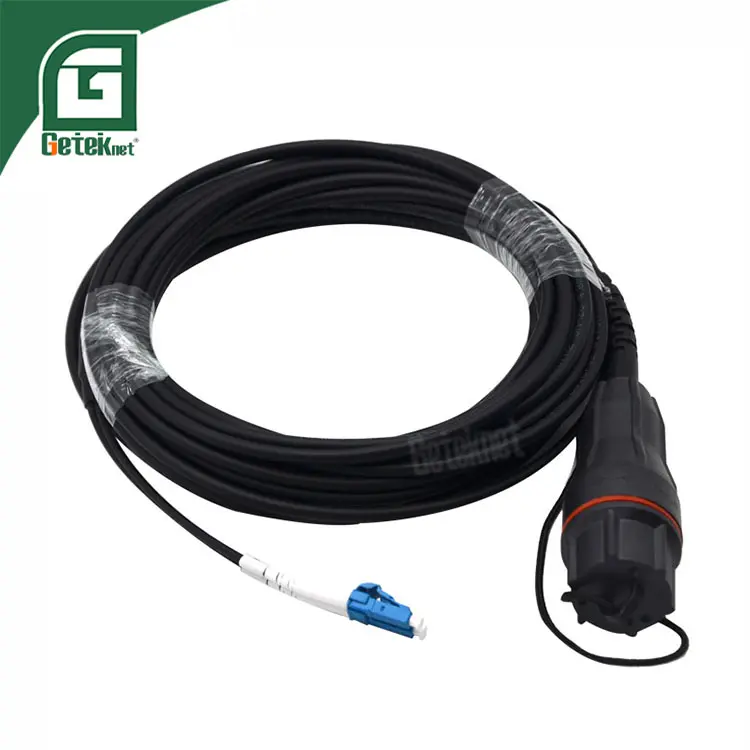
IP67 Waterproof CPRI Patch Cords: These specialized CPRI fiber patch cords connect the RRH to the main fiber trunk. They feature ruggedized, IP67-rated weatherproof connectors that block out heavy rain, dust, and moisture, ensuring the optical connection remains pristine.
-
Ruggedized Armored Fiber Cables: To withstand physical impact, bird bites, and high winds, outdoor fiber cables are often reinforced with a flexible metal armor layer. Furthermore, their outer jackets are made from UV-resistant LSZH (Low Smoke Zero Halogen) materials to prevent degradation from direct sunlight.
Conclusion: Securing the Future of Connectivity
As global data consumption continues to skyrocket, the physical infrastructure supporting our mobile networks must evolve. FTTA solutions for 5G provide the critical bandwidth, reliability, and efficiency needed to power the next generation of wireless communication.
By partnering with an experienced OEM manufacturer, telecom operators can ensure their cell towers are equipped with the highest quality weatherproof fiber assemblies. Investing in premium outdoor fiber infrastructure today guarantees a network that will remain robust and scalable for decades to come.
Frequently Asked Questions
Q: What does FTTA stand for in telecom?
A: FTTA stands for Fiber to the Antenna. It is a network architecture where fiber optic cables replace traditional coaxial cables to connect the Baseband Unit (BBU) directly to the Remote Radio Head (RRH) at the top of a cell tower, providing significantly higher bandwidth.
Q: Why is CPRI important in 5G networks?
A: CPRI (Common Public Radio Interface) is an industry-standard protocol used to carry data between cell tower components. In 5G networks, CPRI and its upgraded version, eCPRI, are transmitted over high-speed fiber optic patch cords to ensure massive amounts of data travel with ultra-low latency.
Q: Can standard fiber optic cables be used on cell towers?
A: No. Cell towers require specially designed outdoor fiber optic cables. These cables must be ruggedized, featuring UV-resistant jackets, metal armoring to prevent physical damage, and IP67-rated waterproof connectors to protect the delicate optical fibers from rain, ice, and extreme temperature fluctuations.